
The Kuki-Zo Council (KZC) has expressed regret over the killing of six Naga civilians in Manipur, apologising to the bereaved families while maintaining that the incident occurred “out of emotion” amid the ongoing ethnic conflict. The remarks, however, have been strongly rejected by the All Naga Students’ Association, Manipur (ANSAM), while the Thadou Human Rights Advocacy (THRA) has sought a National Investigation Agency (NIA) probe into the statements made by the KZC leadership.
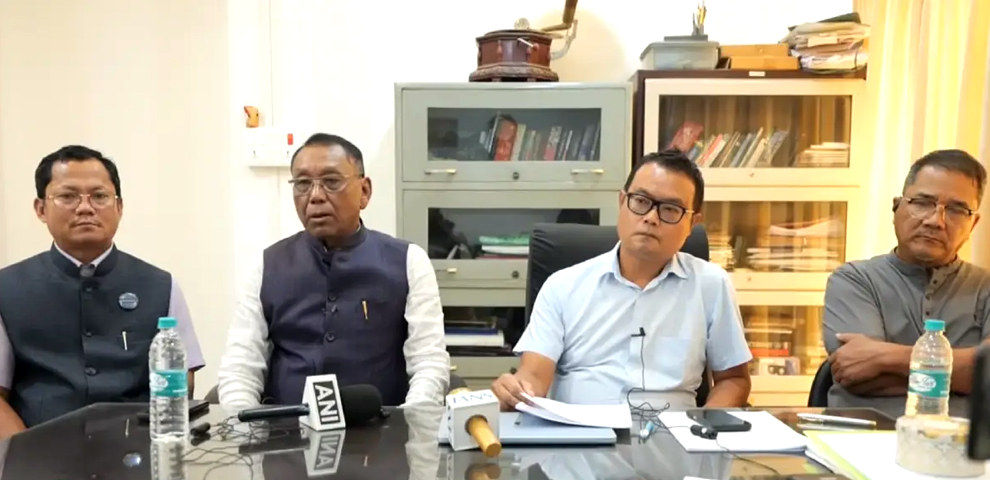
Addressing a press conference in Lamka on June 25, KZC Chairman Henlianthang Thanglet expressed regret over the killing of the six civilians and apologised to the families of the victims. At the same time, he argued that the incident took place against the backdrop of killings of Kuki people and the burning of Kuki villages, asking whether only the Kuki community should be portrayed as perpetrators in the ongoing conflict.
The KZC chairman also questioned why the killing of six Naga civilians had drawn widespread condemnation while, according to him, earlier killings of Kuki victims had not received similar attention. He maintained that the council was not attempting to justify the killings but appealed for equal acknowledgement of the suffering experienced by different communities during the violence.
The remarks have since drawn strong criticism from ANSAM, which said the KZC statement “neither constitutes an apology nor an admission” of the killing of the six Naga civilians.
In a statement issued on Friday, ANSAM said the statement was “tantamount to a direct challenge and insult to the Naga people” and reflected “an alarming disposition of arrogance and perceived supremacy.”
The student body also objected to the KZC’s use of the term “Katcha Nagas,” describing it as derogatory, historically untenable and offensive to the identity and dignity of the Naga people.
“No apology can be deemed credible, sincere, and acceptable until the perpetrators responsible for the abduction, torture, mutilation, and brutal killing of the six innocent Naga hostages are identified, apprehended, and punished in accordance with the rule of law,” ANSAM stated.
It further maintained that justice could not be replaced by statements of regret and insisted that accountability must precede reconciliation.
ANSAM also questioned whether the apology issued by the KZC was made on behalf of those directly involved in the killings or whether the council itself bore any responsibility or association with the crime. It further questioned whether the KZC possessed the mandate to speak on behalf of all communities grouped under the Kuki-Zo nomenclature.
The organisation also sought clarification on whether Zomi organisations had formally accepted the KZC and whether they endorsed the apology issued in relation to the killing of the six Naga civilians.
Referring to the killing of three Thadou Baptist pastors earlier this year, ANSAM reiterated that Nagas had no involvement in the incident, stating that it reportedly occurred in areas where Nagas neither had access nor influence. It alleged that attempts to implicate the Naga community were intended to create communal hostility through misinformation.
Calling upon the Governments of Manipur and India to act with urgency, ANSAM demanded that those responsible for the killing of the six civilians be brought to justice without delay and reiterated its support for the charter of demands submitted by the United Naga Council.
Meanwhile, the Thadou Human Rights Advocacy (THRA) called for the National Investigation Agency to investigate remarks made by KZC Chairman Henlianthang Thanglet during the June 25 press conference, arguing that expressing regret while attributing the killings to “emotion” could not absolve those responsible of criminal liability.
The organisation alleged that the manner in which the six civilians were killed reflected a broader pattern of violence and also referred to the killing of Thadou leader Nehkam Jomhao in August 2025 and the deaths of three Thadou Baptist pastors on May 13 this year. THRA claimed the incidents warranted a wider investigation into possible links and accountability. These allegations have not been independently verified.
THRA further questioned what it described as inconsistencies between earlier statements issued by Kuki Inpi Manipur and the subsequent remarks made by the KZC chairman, alleging possible concealment and obstruction of justice.
The organisation urged the NIA to investigate whether any individuals or organisations had prior knowledge of, participated in, assisted, concealed or obstructed investigations into the killing of the six Naga civilians. It also called for the arrest and prosecution of those allegedly involved in the various incidents of violence, irrespective of affiliation, besides demanding the disarmament of militant groups and strict enforcement of the rule of law.
The KZC’s expression of regret marks the first public acknowledgement by the council over the killing of the six Naga civilians. However, the remarks have also triggered fresh demands for accountability, with Naga and Thadou organisations maintaining that justice, rather than expressions of regret alone, remains central to any meaningful reconciliation.
(With inputs from Ukhrul Times)