

Terat, a band from Mizoram, won the third edition of ‘Ticket to Hornbill 2026’ at the grand finale held at Talkatora Stadium, New Delhi, on November 6, emerging as the winner from 221 bands that auditioned for the national-level competition.
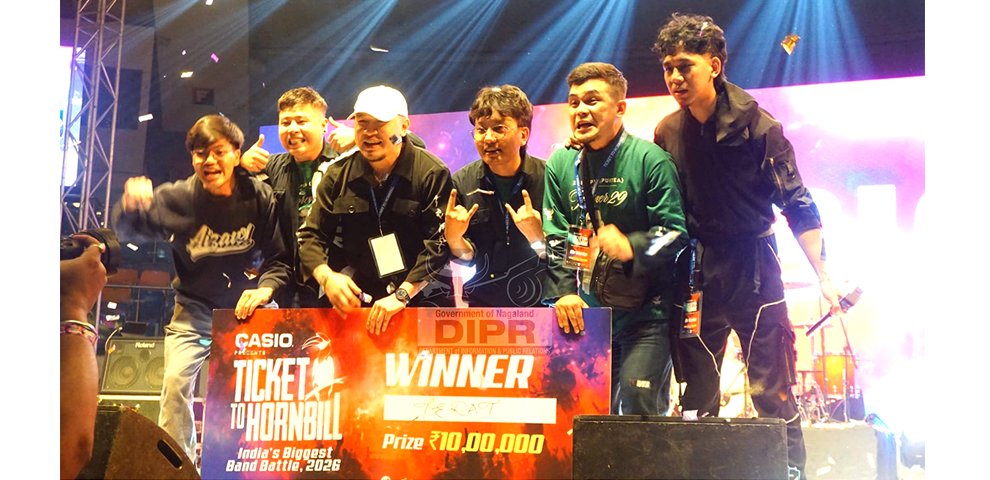
Steel Falcon from Bengaluru finished as first runner-up, while Nchanter from Uttarakhand secured the second runner-up position. The top three bands will perform at the Hornbill Music Festival at Kisama from December 1 to 10.
Terat received a cash prize of Rs. 10 lakh, while Steel Falcon and Nchanter received Rs. 6 lakh and Rs. 4 lakh respectively. Individual category winners also received prizes worth Rs. 5 lakh, sponsored by Furtados and Sennheiser. Casio India sponsored this year’s winners.
Twelve bands qualified for the preliminary round, from which five advanced to the grand finale. The contest was judged by Subir Malik, founder of Parikrama; Arpito Gope, Chief Consultant to the Task Force for Music and Arts (TaFMA); and Mayank Mittal, frontman of KAPOW, India’s first comic rock band.
For the first time, Ticket to Hornbill was held outside Nagaland. TaFMA Chairman Theja Meru said New Delhi was chosen to improve accessibility, reduce costs and provide a band-friendly venue, while also reaching out to the large Naga community in the capital.
Organised by the Department of Tourism, Government of Nagaland, in collaboration with TaFMA and supported by the Ministry of Tourism, the competition seeks to promote Nagaland’s music culture and provide a national platform for emerging bands.
Tourism Secretary Nchumbemo Lotha said music was deeply rooted in Naga social and cultural life, serving as a means of storytelling, preserving history and expressing identity. He said traditional folk songs, indigenous instruments and rhythmic performances reflected the community’s experiences, values and collective memories. This musical heritage, he added, had evolved into a contemporary music culture that had brought Nagaland wider recognition.
Lotha said the Hornbill Festival had grown into an important platform for showcasing the state’s cultural heritage, bringing its tribes together and introducing visitors to its traditions, cuisine, handicrafts and way of life. The government, he said, aspired to extend the spirit of the festival beyond its 10-day celebration and establish Nagaland as a year-round tourism destination.
He said initiatives such as Ticket to Hornbill were intended to take the state’s cultural and creative identity to a wider national audience while creating opportunities for cultural exchange and collaboration among musicians. He added that tourism promotion required the collective participation of artists, entrepreneurs, hospitality operators, local communities and private partners.