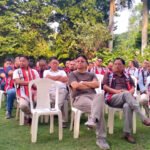

For generations, Naga society has been marked by a strong sense of collective responsibility. In the absence of modern state systems, villages built and maintained their own roads, bridges, wells and drains through shared labor and contribution. Public property was community property, and upkeep was a communal duty rooted in necessity and tradition. That ethic of ownership continues in many villages even today.
With the arrival of modern governance, that responsibility formally shifted. Public infrastructure is now primarily the responsibility of the government, funded through public revenue, including indirect taxes paid by citizens. In principle, the arrangement is clear. The government builds and maintains, while citizens pay and hold the state accountable.
Yet, caught between tradition and modern governance, it is common to see citizens pooling money, donating materials, and offering labor to repair roads and other public utilities. These efforts are often admirable. They reflect civic spirit, urgency, and a refusal to wait indefinitely for official response.
The concern, however, lies in what this practice unintentionally enables. When citizens repeatedly step in to perform functions that belong to the government, it risks weakening institutional accountability. It allows the government to evade responsibility, as gaps in service delivery are quietly filled by community action. The result is not accountability, but substitution. The burden shifts silently from government to individual. Over time, this can normalize government neglect.
There is also a distortion in civic focus. Community mobilization is frequently directed towards immediate repair work, while far less attention is given to systemic accountability. Rarely do we see collective initiatives aimed at legal or institutional redress, such as pursuing cases against poor roads or ensuring enforcement of public works standards. Instead, fundraising drives for road repairs are far more common and widely reported. In effect, people repair the symptoms but rarely challenge the cause.
This is not to dismiss community action, which reflects resilience and solidarity, often born out of frustration with delay and necessity. But it must be recognized that goodwill alone cannot replace governance. While repaired roads may serve immediate needs, the deeper issue of governance failure remains unaddressed.
The more sustainable shift required today is not the abandonment of collective spirit, but its redirection. Community energy must be redirected from substituting the government to scrutinizing it. The responsibility of maintaining public infrastructure like roads must rest where it belongs, with accountable institutions that are compelled, not replaced, by the people they serve.
Instead of routinely filling governance gaps through goodwill contributions, community energy must increasingly be channeled into demanding performance, transparency and accountability from the government. Otherwise, what was once a survival mechanism risks hardening into a quiet acceptance of governmental neglect.