Elders in Mopungchuket village have begun passing on the traditional art of log drum beating to the younger generation, in an effort to preserve one of the most significant cultural practices of the Naga community.
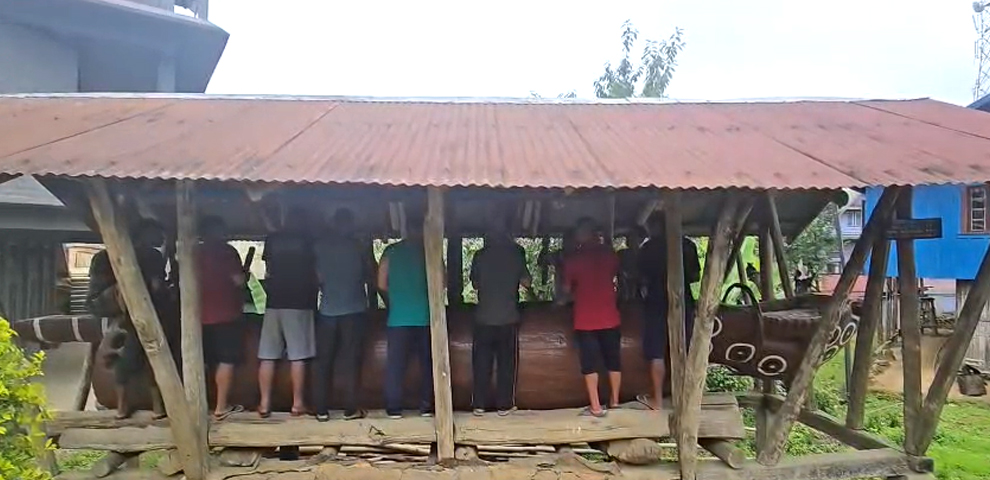
The training session brought together village elders and around 20 young men in their prime from the village, where the elders demonstrated traditional rhythms and explained the historical significance of the log drum, which once served as a key form of communication in the village. The youngsters are to learn all the different beats of the log drum, who will in turn teach their peers.
According to elders, the log drum was traditionally beaten to convey important messages and mark major events, with distinct rhythms used for victory celebrations, enemy attacks, fire emergencies and even lunar eclipses.
Each beat carried specific meaning, allowing villagers to understand the nature of the event being announced long before modern communication systems.
Elders recalled that the last time the log drum was actively used in such a context was in 1983 during the Kosasanger Putu, when it was beaten after a tiger was killed in the village. Later, in 2019, the log drum was again sounded when Riongsanger Putu was replaced by Medemsanger Putu.
The elders said such instances have become rare, raising concern that younger generations may lose connection with the traditional practice if it is not actively preserved and taught.
Participants from the younger generation said the training provided them with an opportunity to learn directly from elders and better understand the cultural importance behind each rhythm.
The initiative is part of ongoing efforts by the Mopungchuket Community Tourism Society to preserve and transmit traditional knowledge systems that form an integral part of the village’s cultural heritage.