

Nagaland University research scholar Repakaba Tzudir from the Department of Sociology, Lumami, represented India at the United Nations World Indigenous Youth Conference 2026 held in Kathmandu, Nepal, where he highlighted the challenges faced by Naga youth and called for balancing economic opportunities with the preservation of Indigenous identity.
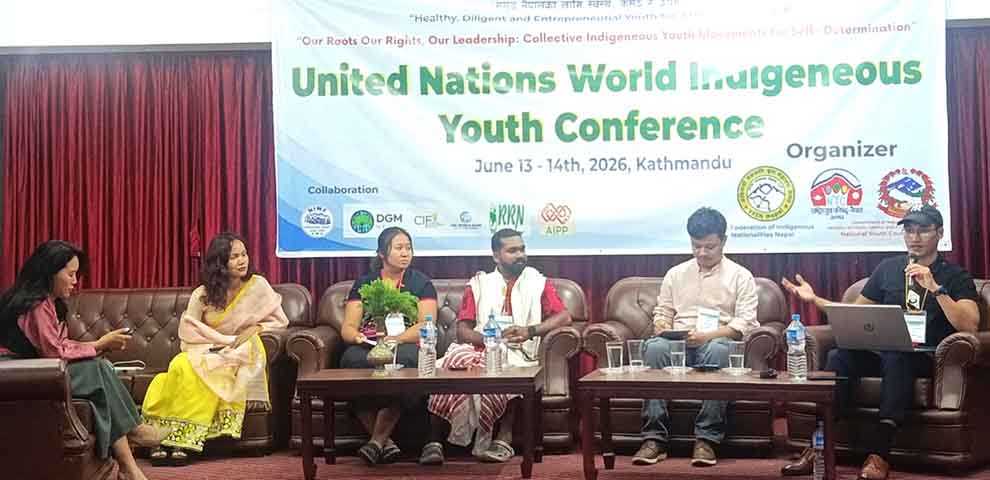
The two-day conference, held on June 13 and 14, was co-organised by the Youth Federation of Indigenous Nationalities (YFIN), Nepal and the National Youth Council (NYC), Nepal under the theme, “Our Roots, Our Rights, Our Leadership: Collective Indigenous Movement for Self-Determination”. The event brought together nearly 150 Indigenous youth leaders, activists, academics and community representatives from across Asia.
Tzudir participated as an International Delegate and Indigenous Scholar alongside representatives from Bangladesh, Myanmar, Nepal and different parts of India. He also served as a panel speaker during the session, “Indigenous Youth Movement in Asia”, where he spoke about the realities confronting Naga youth, particularly unemployment and the tendency of immediate socio-economic concerns to overshadow broader Indigenous aspirations and rights.
Reflecting on the conference, Tzudir said, “The most memorable part of the conference was realising how deeply connected our experiences are, despite coming from different countries and cultures. Although each community has its own history and context, many of us spoke about similar concerns, protecting our identity, safeguarding our lands and cultures, and creating opportunities for young people.”
He said one discussion that left a lasting impression on him centred on how Indigenous youth are striving to preserve their traditions while adapting to a rapidly changing world.
“It reminded me that our struggles are not isolated and that there is great strength in building solidarity and learning from one another across borders,” he said.
According to Tzudir, participants repeatedly discussed issues such as unemployment, migration, limited educational and livelihood opportunities, and the gradual erosion of Indigenous languages and traditional knowledge.
“In Nagaland, unemployment often becomes the immediate concern for many young people, making it difficult to actively engage with broader Indigenous issues and rights,” he said.
At the same time, he expressed encouragement over the efforts of Indigenous youth organisations across Asia in promoting leadership, advocacy, cultural revitalisation and community participation.
“One important lesson Nagaland can take from these experiences is that economic development and Indigenous identity should not be viewed as competing priorities. Young people need opportunities to build sustainable livelihoods while remaining connected to their communities, cultures and values,” he added.
The conference strengthened networks among Indigenous youth and deepened understanding of shared challenges across countries, reinforcing Tzudir’s commitment to research, advocacy and community engagement for Indigenous peoples. Participation in the conference was supported by the Indigenous Peoples of Asia Solidarity Fund and YFIN Nepal, which provided travel and hospitality support.