

A research team from the Desert Regional Centre of the Zoological Survey of India (ZSI), Jodhpur, under the National Mission on Himalayan Studies (NMHS), visited the Department of Zoology, Nagaland University, Lumami, on July 21, 2026, to explore opportunities for collaborative research.
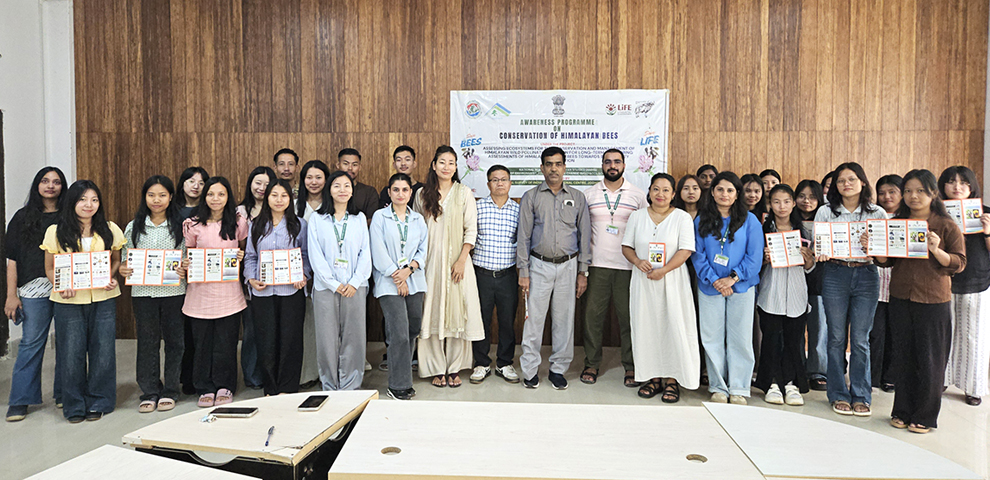
The team is implementing a research project titled “Assessing Ecosystems for the Conservation and Management of Himalayan Wild Pollinators: Action for Long-term Monitoring Assessments of Himalayan Bumblebees towards Biodiversity Conservation.”
Dr Lobeno Mozhui chaired the programme, while Prof Ranjit Kumar, Head of the Department of Zoology, welcomed the visiting team and presented an overview of the department’s research activities. He highlighted the department’s ongoing work in biodiversity, entomology, and conservation biology, and expressed optimism about future collaborative initiatives between the two institutions.
Dr Muzafar Riyaz, team leader of the NMHS project, led the visiting delegation and delivered an insightful presentation outlining the project’s objectives, methodology, and major achievements. He emphasised the ecological significance of Himalayan wild pollinators, particularly bumblebees, and the need for long-term monitoring to support biodiversity conservation and ecosystem management.
Following the presentation, an interactive practical session was conducted for M.Sc. third-semester students of the Department of Zoology. The hands-on activity provided students with practical exposure to pollinator research methods, specimen handling, and biodiversity assessment techniques, fostering active participation and encouraging interest in pollinator conservation research.
The visit concluded with discussions on potential collaborative research, student training, and future academic interactions between the Zoological Survey of India and the Department of Zoology, Nagaland University, strengthening efforts towards biodiversity conservation and scientific research in the Himalayan region.