

First Rain Foundation’s one-year outreach highlights recovery and shortage of psychiatric care
After living with schizophrenia for 13 years, one participant said treatment through a mental-health outreach camp helped him understand his hallucinations as symptoms of his illness and stop using alcohol and drugs.
Another participant, who had struggled with anxiety and repeated panic attacks, said regular counselling, medical guidance and follow-up visits helped her gradually regain confidence.
The experiences were shared on Friday as the First Rain Foundation marked one year of its monthly mental-health outreach programme in Mokokchung, conducted in partnership with the Mental Illness Treatment Alliance (MITA), an initiative of Action Northeast Trust (ANT).
Since the program began last August, more than 78 clients aged between 11 and 88 have received support.
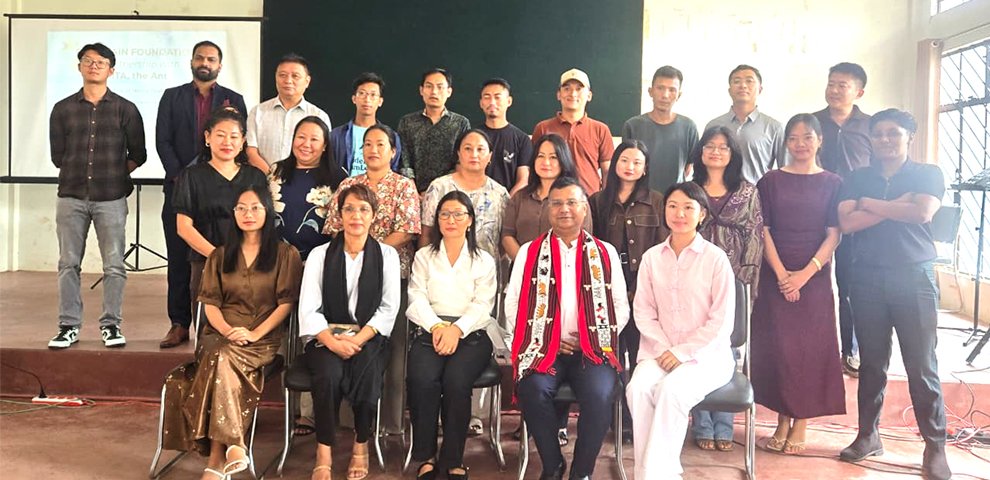
According to Temshier of First Rain Foundation, the initiative was initially started with a focus on psychosocial support and counselling rather than psychiatric intervention.
The partnership with MITA later provided training, human resources, medicines and other support to conduct the outreach camps.
“Most of our clients are old people in their later stages of life,” Temshier said, adding that the community had gradually become more receptive to mental-health awareness.
However, the first year has also highlighted the shortage of specialist psychiatric care in the area.
Temshier said the team could provide psychosocial support and counselling, but diagnosis and prescription required psychiatrists.
“Since we do not have a psychiatrist at the moment, it would be really good if we could have one,” he said.
Reflecting on the experience of conducting the camps for nearly a year, Temshier said the organisation did not have sufficient data to draw conclusions about the overall mental-health situation in Mokokchung or Nagaland.
However, he said the outreach had shown that many people were struggling with mental-health concerns.
Stigma, misconceptions and lack of awareness continue to be among the major challenges, he said.
At the same time, Temshier said the close-knit nature of Naga society could be an important strength in supporting people experiencing mental-health difficulties.
“We are a very well-knit society,” he said, adding that people can come forward to listen to those who need help and monitor their condition.
He said strengthening such community support systems could help build a more resilient community despite the shortage of professionals and financial resources.
The need for greater attention to children’s mental health was also highlighted by Lanuakum Aier, counsellor at Eden Academy.
“A child only wants to be heard or seen, but there is a little bit of ignorance from the parents,” Aier said.
Aier’s observation adds another dimension to the mental-health concerns being addressed through the initiative, particularly the need for parents and communities to recognise when children may require emotional or psychological support.
Dr Mintu Moni Sarma, Team Lead of MITA, said the partnership with First Rain was part of MITA’s community mental-health approach, in which the community is treated as an important stakeholder in managing mental-health needs.
MITA began its work nearly 19 years ago. Sarma said the organisation provided initial hand-holding to First Rain, including training, capacity building for doctors and other team members, procurement of medicines and support for conducting the camps.
He said First Rain had played an important role in the mental-health sector in Mokokchung and surrounding areas of Nagaland.
The first First Rain Foundation mental-health camp was launched with the aim of reducing stigma, increasing awareness and creating an inclusive environment for people seeking mental-health care.
One year into the program, the experiences shared by participants point to the importance of accessible and continued mental-health support, while the organisers continue to face a shortage of specialist professionals.