

Government inspection flags plastic-clogged drains, dumping site saturation and weak municipal systems as key concerns behind recurring urban flooding
With the monsoon approaching, Nagaland Chief Secretary Sentiyanger Imchen on Monday linked Dimapur’s recurring flood concerns to plastic-choked drains, improper waste disposal and weak sanitation systems, directing that household-level waste segregation be implemented without delay. He also stated that municipal bodies would be held directly responsible for solid waste management.
Imchen made the remarks after inspecting several flood-affected and flood-prone areas in Dimapur and East Dimapur, including Nagarjan Police Point, Vilhume/SM Colony, East Block Burma Camp (Narkul Turning), DMC dumping area, Sunrise Colony and New Field Check Gate.
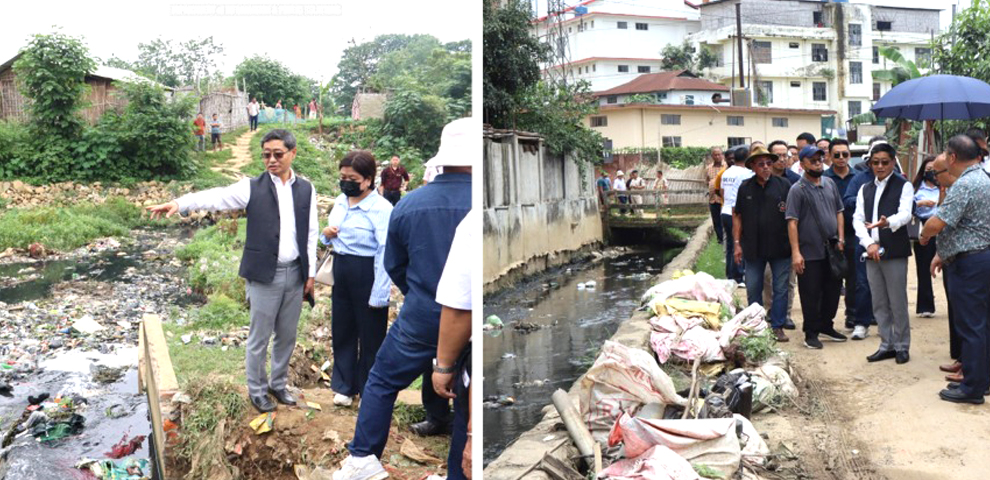
During the inspection, officials briefed him on recurring issues such as clogged drainage systems, encroachment along drainage channels and inadequate drainage infrastructure in several localities.
At a subsequent review meeting on urban management and flood mitigation, Imchen highlighted the growing problem of drains blocked by plastic waste and improper disposal practices.
He said strainers should be installed across upstream nullahs to prevent plastic and other debris from entering drainage channels. Similar measures, he added, should also be incorporated into check dams and drainage infrastructure, subject to availability of funds.
Raising concern over the dumping system, Imchen observed that the existing site was nearing saturation due to the absence of waste segregation practices.
He directed that segregation of biodegradable and non-biodegradable waste at the household level must be implemented without delay, adding that the government would soon issue necessary orders.
Imchen further stated that municipal bodies would be held accountable for solid waste management and urged municipal councils, civil society organisations and the Naga Council to work together to improve sanitation, remove encroachments and ensure proper waste disposal.
Expressing dissatisfaction over municipal services, he noted that despite adequate manpower, poorly maintained garbage collection vehicles were affecting operations. He directed authorities to prioritise repair and maintenance and improve resource use.
He also stressed the need to appoint and empower sanitation inspectors to enforce sanitation rules on the ground, ensuring strict compliance across localities.
On public participation, Imchen said citizens must cooperate by maintaining cleanliness, segregating waste at source and paying sanitation fees, adding that trust in municipal services would improve if delivery becomes more efficient.
He called for intensified Information, Education and Communication (IEC) activities, warning that without behavioural change, long-term sanitation goals would remain difficult.
He also urged coordinated action among the State Disaster Management Authority, district administration, police, PHED and municipal bodies to address recurring flooding and sanitation challenges.
Meanwhile, DC Dimapur Dr Tinojongshi Chang informed the Chief Secretary that a monsoon preparedness and mitigation plan involving line departments, urban bodies, ward authorities, GBs and community stakeholders is already in operation.
He said vulnerable flood-prone areas and drainage choke points were identified through joint inspections, following which drainage clearance began on May 16 under the Dimapur District Drainage Clearance Committee (DDDCC), using DDMA funds for immediate mitigation.
He added that the Incident Response System (IRS), earlier used in mock drills and Operation Night Guard, would be activated during flash floods, with teams assigned for evacuation, rescue and relief.
Departments including Health, PHED, Food & Civil Supplies, Power, SDRF, Fire & Emergency Services and Dimapur Municipal Council have been kept on alert for deployment whenever required, while the Emergency Response Fund under DDMA is being kept readily available for urgent utilisation.
(With DIPR inputs)