
Pilot clusters in Tuophema and Ghotovi to anchor statewide expansion through nurseries, washing stations, branding and tourism
Nagaland on Monday launched the Rs 44.06 crore ‘Cluster-based Coffee Value Chain Development in Nagaland’ project, with Chief Minister Dr Neiphiu Rio describing coffee as a “vehicle for sustainable prosperity” capable of transforming livelihoods, reducing dependence on jhum cultivation and positioning the state in premium coffee markets.
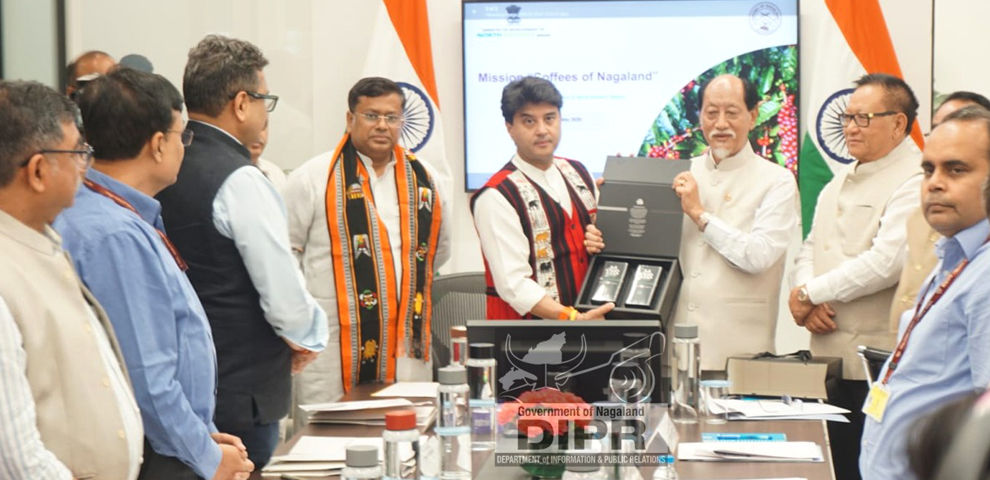
The project was jointly launched virtually at Sanchar Bhawan, New Delhi by Union Minister for Development of North Eastern Region (DoNER) Jyotiraditya Scindia and Chief Minister Rio in the presence of Minister of State for DoNER Sukanta Majumdar, Deputy Chief Minister for Planning & Transformation and National Highways TR Zeliang, Advisor for Land Resources G. Ikuto Zhimomi, senior government officials, representatives from the Coffee Board of India, farmers and entrepreneurs.
Expressing gratitude to the Ministry of DoNER, Rio said Rs 44.06 crore is being provided by DoNER and the North Eastern Council (NEC) to the Department of Land Resources, Government of Nagaland, for implementation of the project.
Highlighting the sector’s growth, Rio said coffee in Nagaland “is no longer just an alternative crop,” noting that production in the state has increased from 21 metric tonnes in 2021–22 to nearly 73 metric tonnes in 2024–25.
“Coffee is becoming a vehicle for sustainable prosperity,” Rio said, while reiterating the state’s larger target of expanding coffee cultivation to 50,000 hectares by 2047 under the Viksit Nagaland vision.
Under the project, Tuophema in Kohima district and Ghotovi in Niuland district have been selected as pilot clusters, which the government intends to gradually expand across all districts.
ALSO READ | ‘Coffees of Nagaland’ mission virtually launched at Tuophema
According to the Chief Minister, the pilot phase will include hi-tech nurseries to ensure quality planting materials, modern post-harvest infrastructure including nine washing stations and roasteries, and a branding and marketing strategy to establish “Coffees of Nagaland” as a premium, traceable, single-origin brand.
Rio said the initiative is designed not only to improve agricultural productivity but also to provide dignified livelihoods, conserve forests and protect Nagaland’s fragile ecology by reducing dependence on shifting cultivation.
He further said the project would integrate experiential coffee tourism and farm stays, enabling visitors to experience the journey “from cherry to cup,” while creating additional income streams for youth and entrepreneurs and showcasing Nagaland’s cultural and tribal heritage.
ALSO READ | How Khar kept Nagaland’s coffee vision alive since 1981
Assuring full administrative and political support for timely implementation, Rio said the Department of Land Resources has been directed to ensure effective use of funds and meaningful empowerment of beneficiaries.
He also called upon farmers to embrace new technologies, participate in training programmes and become brand ambassadors of Nagaland coffee.
Scindia bets on Nagaland coffee
Launching the “Cluster-Based Coffee Value Chain Development in Nagaland” project, Scindia described the initiative as the beginning of a transformative journey aimed at positioning coffee as Nagaland’s unique strength while strengthening rural livelihoods.
He stated that the Ministry of DoNER recognises the Northeast as a hub of unique produce and entrepreneurial potential, adding that Nagaland’s agro-climatic conditions are highly suitable for premium Arabica and Robusta coffee. He said the project seeks to improve the position of tribal farmers in the value chain by creating better earning