A monolith foundation stone erection programme was held at Longsa Village on April 25 in a significant effort to document and preserve the village’s historical legacy, which is believed to date back to AD 1258.
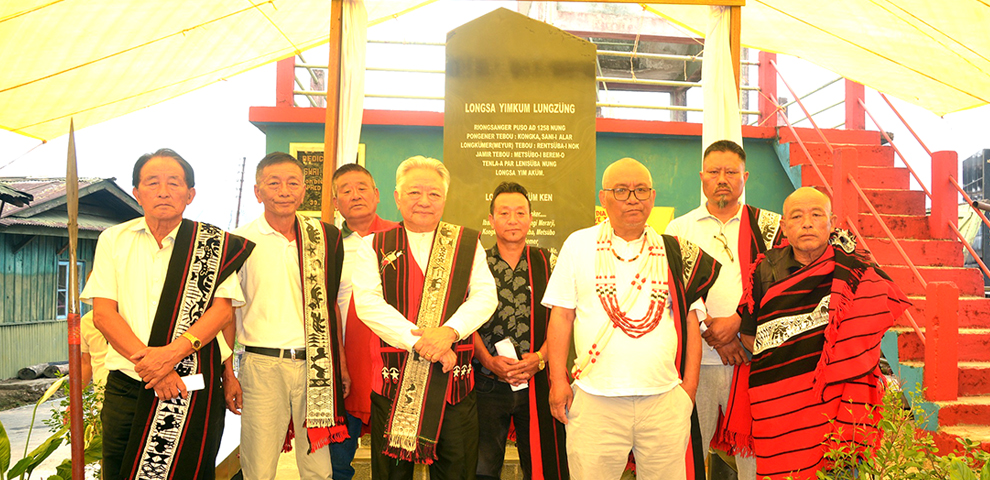
The monolith, erected as a symbol of Longsa’s origin, honours the Riongsanger generation and the forefathers of the three clans that founded the village: Kongka, Sani of the Pongener clan, Rentsüba of the Longkumer/Meyur clan, and Metsübo of the Jamir clan.
The foundation stone was inaugurated by Alemtemshi Jamir, IAS (Retd), who highlighted the importance of history in shaping identity and roots.
Addressing the gathering, Jamir said that questions relating to one’s origin, family, and village define an individual, adding that without such knowledge, a person remains unrecognised.
He described the erection of the monolith as a major step towards preserving the history of Longsa Village, its people, and its founding clans, while also acknowledging the present Mejensanger Putu generation. He expressed hope that further initiatives would be undertaken to document the village’s rich past.
Jamir said the significance of the monolith extends beyond the founding of the village and reflects how the community has lived and progressed over several centuries. Recalling his father, N. I. Jamir, he said he had once wished to write the history of Longsa “in alphabets of gold.”
Referring to the lives of the forefathers, he noted that despite the absence of modern transport and facilities, they sustained themselves through agriculture and undertook journeys across villages while upholding dignity and honour.
He added that the monolith serves as a reminder of the endurance and legacy of the ancestors, as well as the village’s existence spanning more than seven centuries.
Earlier, Limaakum Tatar spoke on the significance of the monolith. Short speeches were delivered by Akangjungshi Tatar and Temjensosang Tatar. The programme was chaired by Bendangwati Tatar. Rev. Supongchiten offered the invocation, while Alemwati Tatar delivered the vote of thanks. The closing prayer was pronounced by Temsuyanger.